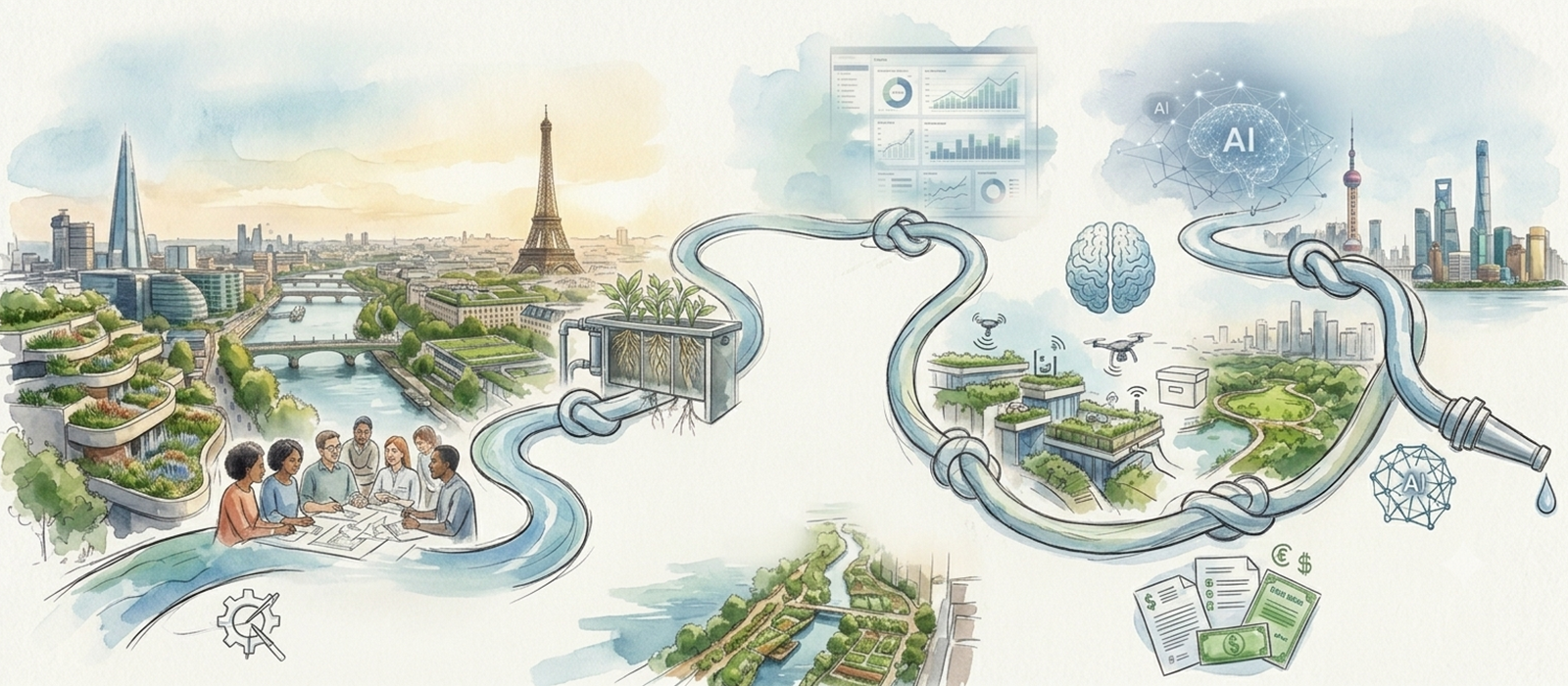
Global investment in nature-based solutions has doubled in recent years, reaching an estimated $49 billion, with China's Sponge Cities Programme alone directing over $26 billion towards more than 30 cities in 2023.1 These figures are significant, but the more telling shift is qualitative: urban nature-based solutions (NBS) have largely moved beyond the experimental pilot phase that characterised the previous decade. Cities such as Copenhagen, Singapore, Medellín, Kigali and Zurich are now implementing NBS at a scale and with a strategic coherence that was, until recently, aspirational.
And yet projections from UNEP warn that urban NBS remain woefully underfinanced if climate adaptation targets are to be met.2 The gap between current investment and what is required is not primarily an awareness problem. It is a confidence problem. Cities need defensible evidence that nature-based approaches will perform reliably under real-world conditions, maintain their performance over time and justify the financial and political risk that their champions accept when they put them forward. During my time in Australia, I heard stories of municipalities rejecting further nature-based interventions due to a single failure experienced. We need to move from treading careful waters to confidence action.
This contribution is an adaptation of a larger article, prepared by myself and several co-authors on behalf of the IWA Joint Committee on Urban Drainage (JCUD) Specialist Group and highlights key trends in urban NBS from an urban drainage perspective and with reference to other ecosystem services that nature delivers in our cities. We draw on recent research and practice to identify what has advanced, where critical gaps remain and what practitioners and decision-makers need to pay attention to now.
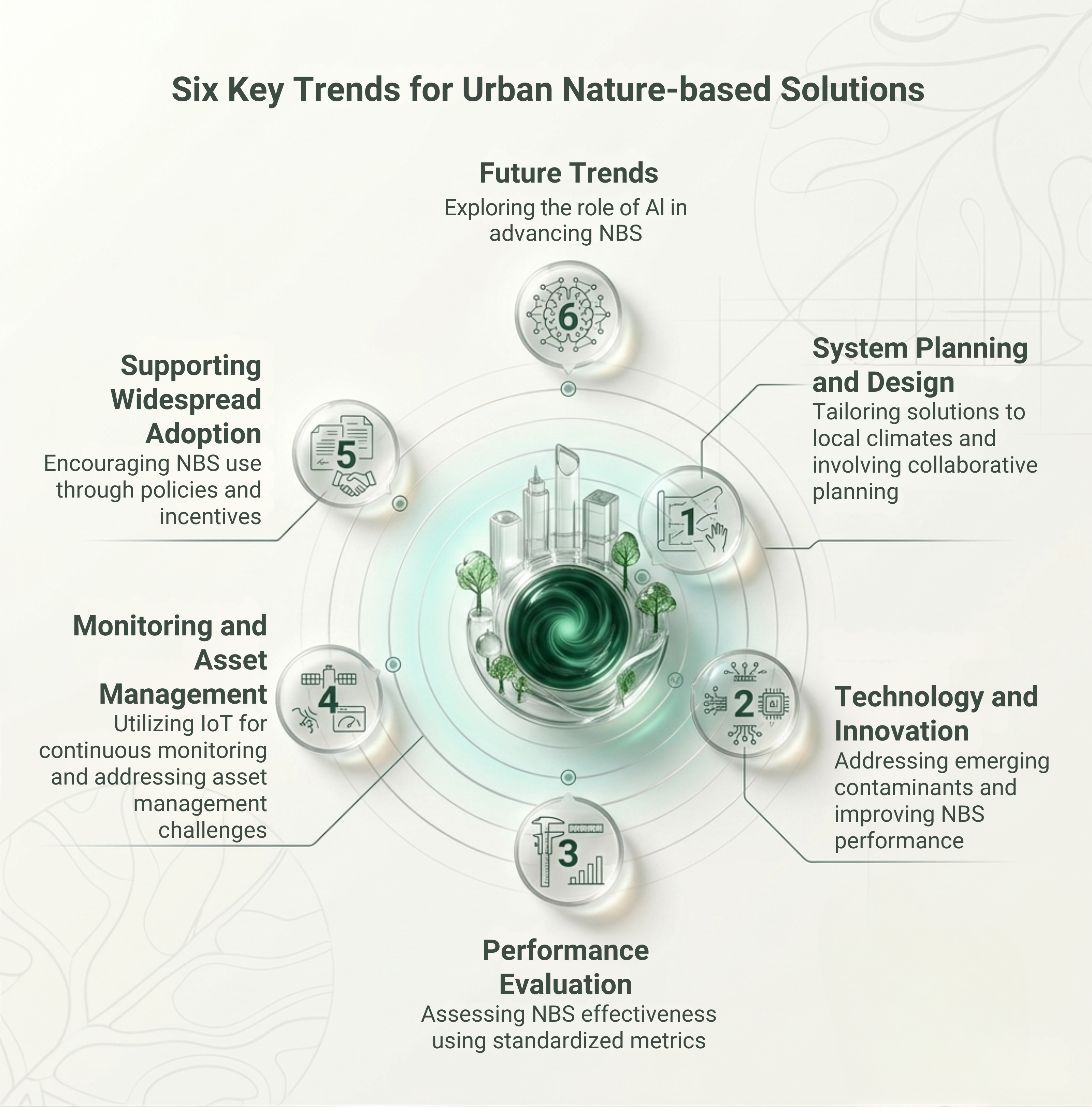
Figure 1. Summary of key trends in NBS in urban drainage.
Trend 1: Context-sensitive design has become the baseline expectation
We have noticed a clear shift away from the "one-size-fits-all" approach that characterised early NBS uptake. Context-sensitive design is now standard in the literature, with a growing body of publications addressing systematic, locally adapted implementation across diverse climates and urban typologies.
This means not only tailoring solutions to local climatic conditions, a particular concern for arid and semi-arid cities where the viability of conventional NBS components requires reassessment, but also investing in collaborative planning that brings communities, engineers, ecologists and planners into shared decision-making from the outset. Evidence from Australia, Brazil and Costa Rica consistently points to the value of co-design approaches, particularly in Global South contexts where governance structures, resource constraints and urban growth trajectories differ substantially from those in the Global North.
Multi-functionality has also matured from a design co-benefit to a design imperative. Water's role as a governing variable, shaping heat mitigation through soil moisture retention, biodiversity outcomes through hydrological connectivity and public amenity through the quality of urban green space, is now well-established across multiple disciplines. Logically, water is vital for keeping nature alive! Case studies such as Copenhagen's Cloudburst Management Plan, Medellín's Corredores Verdes and Barcelona's Superblocks demonstrate this integrated thinking at operational scale. The practical implication for cities is direct: NBS must be planned across multiple performance objectives simultaneously. Designing for drainage alone and expecting other ecosystem services to follow is no longer a defensible approach.
Trend 2: Emerging contaminants are raising the performance bar
Research has moved well beyond the hydraulic performance questions that occupied the previous decade. Pharmaceutical compounds, microplastics and per- and polyfluoroalkyl substances (PFAS) are now established research priorities, particularly in bioretention systems and constructed wetlands that receive stormwater from urban catchments.3
This matters for practice in two ways. First, increasingly stringent regulatory requirements, including the revised EU Urban Wastewater Treatment Directive4 and the EU Nature Restoration Law,5 are raising the performance standard that NBS must meet. Systems designed to current specifications may face compliance challenges under future regulatory frameworks, which is a material consideration for infrastructure with a service life of 20 to 40 years. Second, the treatment function of urban NBS now extends well beyond stormwater flow management. Constructed wetlands in particular offer opportunities for resource recovery and nutrient circularity, broadening the value proposition for municipalities evaluating long-term infrastructure investment.
Performance under extreme climate conditions also demands renewed attention. The behaviour of NBS under concurrent drought and heat stress, during major flood events and in cold-climate settings represents an active and, in several respects, unresolved area of research. Vegetation selection, specifically the use of drought-tolerant and climate-appropriate native species, has emerged as a critical design variable in response to these challenges.
Trend 3: Performance quantification is advancing, but inconsistency persists
Standardised performance metrics are crystallising across the field, though precise quantification remains inconsistent. Established assessment frameworks evaluate urban NBS against hydrological indicators (peak flow attenuation, runoff reduction, infiltration rates), biodiversity indicators (species richness, habitat connectivity), climate resilience indicators (heat reduction, flood risk, drought resilience), social indicators (recreation, health, community perception) and economic indicators (cost-benefit ratios, avoided infrastructure damage, property value effects). The breadth of this framework reflects the multi-functional ambition of contemporary NBS planning. The inconsistency in how individual indicators are measured reflects the field's continued maturation.
Modelling tools have advanced considerably. The US EPA's Stormwater Management Model (SWMM) remains the dominant platform for urban drainage research, now complemented by a growing range of modules addressing evaporation, flood performance and NBS-specific processes. At the strategic planning level, support tools including BGIS and UrbanBEATS have been updated to account for ecosystem service trade-offs beyond stormwater management alone, providing planners with a more complete picture of how NBS investment will perform across a portfolio of objectives. UrbanBEATS is a legacy tool that I developed during my research career and, more recently, BGIS was merged with UrbanBEATS to produce BGISHUB, a much more sophisticated full-pipeline model that can support planners from the start (spatial prioritization), to design (NBS feasibility, options and design) through to performance evaluation.
The persistent challenge is data quality and availability. The tools and methods exist, but their usefulness in a given context is governed by the underlying data, and data quality across many urban systems remains uneven. Investment in data infrastructure is, in this sense, as important as investment in the NBS themselves.
Trend 4: Monitoring is growing, but long-term data remains scarce
Perhaps the most significant practical constraint on urban NBS credibility has been the absence of reliable long-term performance data. Post-implementation monitoring has historically received far less resource than pre-implementation planning and design. This is beginning to change.
Advances in Internet of Things (IoT) technologies and broader urban digitisation have reduced the cost and complexity of continuous NBS monitoring substantially. Real-time control approaches to bioretention systems have become an active field of research, and low-cost sensor development is increasing the viability of dense, catchment-scale monitoring networks. High-resolution remote sensing techniques are emerging as a further avenue for landscape-scale monitoring of blue-green infrastructure.
Real-world monitoring initiatives are accumulating. Copenhagen's Cloudburst Management Plan includes a large-scale monitoring network. Philadelphia's Green Infrastructure Living Laboratory is generating longitudinal performance data. Digital twin approaches are also beginning to appear in urban water management contexts.
Despite this progress, long-term performance data beyond five to ten years remains scarce. Asset management practices also lag. Progress on standardised inventories and maintenance protocols is slow, and current practice relies largely on local and domain knowledge within individual municipalities rather than on systematised approaches. This gap is consequential. Investing in an NBS asset without a plan to monitor and maintain it is a familiar form of institutional short-termism that the field must address directly if widespread adoption is to be sustained.
Trend 5: Policy momentum is building, but equity demands attention
The NBS concept has gained policy traction across multiple sectors, extending well beyond water management into nature conservation, urban planning and architecture. National programmes and policy frameworks have emerged across several continents: China's Sponge Cities Programme, Singapore's Active Beautiful Clean Waters Programme, the UK Biodiversity Net Gain policy, Switzerland's Sponge Cities Network and France's Integrated Stormwater Management Action Plan among them. Newer financial instruments, including green bonds and nature credits, and reporting frameworks such as the Taskforce on Nature-related Financial Disclosures (TNFD),6 are building greater economic transparency around NBS and supporting the business case for nature-first approaches over conventional grey infrastructure.
International knowledge networks are an important and underappreciated part of this scaling story. Within organisations like the International Water Association (IWA) specifically, the establishment of the Nature-based Solutions Cluster and the renewal of the International Blue-Green Infrastructures Working Group within the JCUD Specialist Group represent active contributions to building and disseminating the global evidence base.
The most significant unresolved challenge in this space is equity. Green gentrification, the documented pattern by which NBS investment raises property values and displaces lower-income residents from improved urban areas, requires genuine and sustained attention.7 Effective micro-scale approaches for informal settlements, including those documented in Kigali, Rwanda, demonstrate that equitable NBS implementation is achievable. But fear and uncertainty around unintended consequences remain a real barrier to adoption in many city contexts, and the evidence base on equitable NBS delivery is still limited.
Looking ahead: digitisation, AI and the road to confident adoption
The rapid emergence of generative artificial intelligence since late 2022 has introduced both genuine opportunity and legitimate uncertainty across the NBS field. GenAI tools have demonstrated real value as knowledge-bridging assistants, accelerating how practitioners access and synthesise evidence across disciplines.8 For urban NBS specifically, opportunities exist in planning support, performance communication, asset management and cross-domain knowledge integration.
However, the field requires careful and critical engagement with these tools. Outputs from foundational large-language models and image generation systems require human scrutiny before they are communicated as technical findings. Accuracy and transparency are not features that AI tools guarantee. They are requirements that practitioners must enforce.
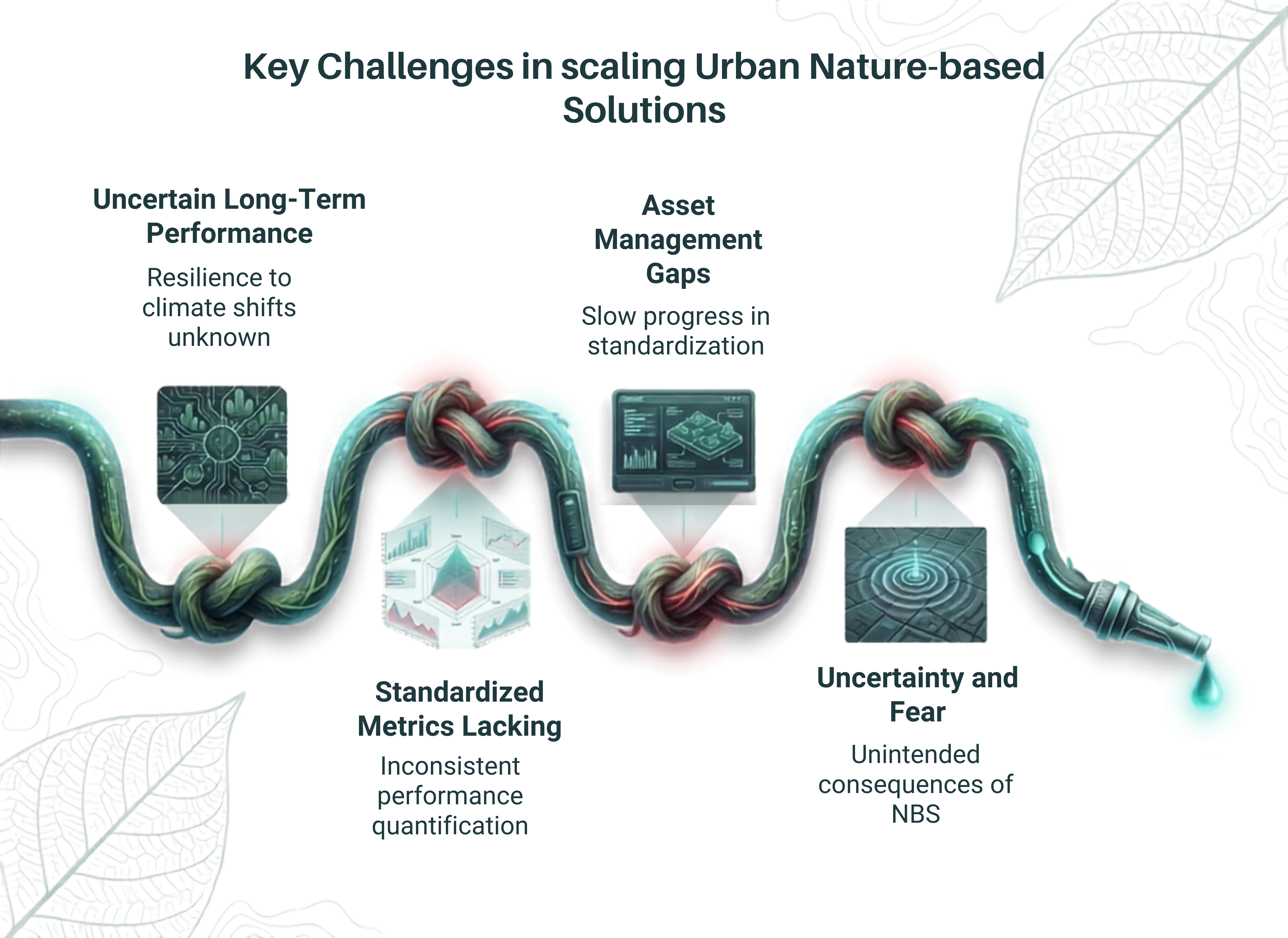
Figure 2. Key challenges in scaling urban NBS and future research needs.
The broader picture from the evidence reviewed here is cautiously optimistic. Investment is growing, policy frameworks are multiplying and there is a clearer shared understanding of what constitutes evidence-based NBS practice than at any previous point in the field's history. What remains is the hard work of consistent monitoring, honest reporting of both successes and failures and the institutional patience to allow nature-based systems to prove themselves over the time periods they require.
Authors
This Insight adapts key messages from a contribution to the IWA Global Trend Report on Urban Drainage (forthcoming), prepared on behalf of the IWA Joint Committee on Urban Drainage (JCUD) Specialist Group by Peter M. Bach (EdenCT / Monash University, Australia), Veljko Prodanovic (Institute of Artiifical Intelligence, Serbia / UNSW, Australia), Sylvie Spraakman (University of Victoria, Canada), Luis Sañudo-Fontaneda (University of Oviedo, Spain) and Manfred Kleidorfer (University of Innsbruck, Austria).